

Dental fillings are one of the most common procedures in dentistry, yet the question of whether they hurt is one patients ask more than almost any other. The answer depends on several factors, and understanding each one can make a real difference to how you approach your appointment.
At The Smile Artisans in Mortlake, we take a considered approach to every tooth filling treatment, combining precise technique with honest, evidence-based advice so you can make an informed decision about your care.
Quick Overview
- What it is: A dental filling is a restorative procedure used to remove decay and seal a tooth, typically completed in a single visit
- Who it may apply to: Anyone with a cavity, cracked tooth, or early-stage decay may need a filling; how the experience feels often varies with cavity depth, tooth location, and individual sensitivity
- What it involves: Local anaesthetic is used before treatment begins; most patients report some pressure or vibration during the procedure, though how this feels differs from person to person
- What influences outcomes: The depth of the cavity, the filling material used, and how the nerve responds after treatment can all affect post-procedure comfort in ways that vary between patients
- What guides next steps: Whether sensitivity after a filling is improving, holding steady, or worsening over time is a useful signal about whether follow-up is needed
Keep reading to understand what happens before, during, and after a dental filling, what post-procedure sensitivity is normal, and when to contact your dentist.
What actually happens during a dental filling?
 The procedure is designed to keep discomfort to a minimum. Before any work begins, your dentist will apply local anaesthetic to thoroughly numb the tooth and the tissue around it. The injection itself is usually brief, and most dentists apply a topical numbing gel to the gum first to reduce the initial pinch.
Your dentist will check that the area is adequately numb before proceeding. Once it is, the main sensations are pressure and vibration, though how much you feel can vary depending on where the tooth is and how deep the cavity sits.
Once the anaesthetic is working, the decayed tooth structure is removed using a dental drill and water spray. The filling material is then placed in layers, shaped to match the natural contours of the tooth, and hardened using a special light. The process is methodical, and your dentist will adjust pressure and technique throughout. If at any point you feel more than you expected, letting your dentist know is always the right step.
What should I expect once the numbness fades?
Once the local anaesthetic fades, it is normal for the tooth to feel different for a period. You may notice tenderness when biting, brief sensitivity to cold food or drink, or a general awareness of the tooth that was not there before. This is your tooth’s natural response to the procedure and is not a sign that something has gone wrong.
Tooth sensitivity is common after a filling and may last for a short period. For shallow to moderate cavities, sensitivity often settles within a few days to a week. For deeper fillings that sit closer to the nerve, the adjustment period may extend to two to four weeks.
A 2015 systematic review published in Dental Materials found that post-operative sensitivity is a well-documented occurrence following composite resin restorations and is influenced by multiple factors, including the depth of the restoration and the adhesive technique used.
During this period, some practical steps can help:
- Avoid very hot or cold foods and drinks until sensitivity eases
- Chew on the opposite side if one area feels tender
- Avoid hard or sticky foods while the tooth settles
- Over-the-counter pain relief such as paracetamol or ibuprofen can help with mild discomfort; follow the dosage instructions
What makes some fillings more uncomfortable to recover from?
The recovery experience after a filling is not the same for every patient, and a few things explain why.
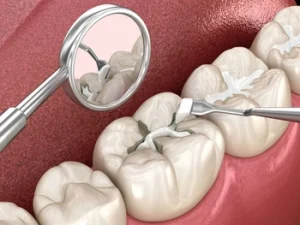 One factor is how the bite settles once the anaesthetic wears off. If the filling sits even slightly high when you close your teeth, that extra pressure builds up quickly and can make the tooth feel sore in a way that is easy to confuse with normal healing. A quick adjustment usually resolves it.
Individual sensitivity also varies more than most people expect. Someone with already sensitive teeth going into a procedure is likely to notice more in the days after than someone who does not. This is not an indicator of a problem, just how different teeth respond.
The depth of the cavity plays a role too, since a filling that sits closer to the nerve has a longer adjustment period than one placed further away. This is one of the practical reasons catching decay early tends to make the whole experience more straightforward.
Finally, the material used and the layering technique both affect how the tooth bonds and settles. Composite resin requires precise placement, and any variation in technique can influence how the tooth feels in the short term.
What if anxiety is making the procedure feel harder?
Dental anxiety is more common than many patients realise, and it can amplify how any sensation feels in the dental chair. This does not mean avoiding treatment; untreated decay progresses, which often leads to more involved procedures down the track.
Concern about pain can cause patients to delay treatment, but understanding what to expect at each step is one of the most effective ways to reduce that concern before the appointment.
For patients who find the idea of a filling genuinely distressing, a number of options are available. At The Smile Artisans, sleep dentistry is offered for patients who need a higher level of support. Nitrous oxide (laughing gas), administered via a small mask placed over the nose, is a lighter option that can help patients feel more settled throughout the procedure.
Beyond sedation, a straightforward conversation with your dentist before the procedure can reduce anxiety significantly. Knowing each step before it happens, agreeing on a signal to pause if needed, and going at a pace that suits you all make a difference. The Smile Artisans team is experienced in working with patients across a wide range of comfort levels.
Does treating decay early change the experience?
 It does, in most cases. A cavity detected at a check-up before symptoms develop is typically smaller and shallower than one that a patient first notices because of sensitivity or toothache. A smaller cavity requires less removal of tooth structure, a less invasive preparation, and places the filling material further from the nerve.
Regular dental visits allow problems to be found and treated early, which often reduces the extent of treatment needed. From a patient comfort perspective, early detection is one of the most practical ways to make a filling more straightforward to manage.
The inverse is also true. Decay that is allowed to progress reaches the pulp, causes a toothache, and may ultimately require root canal treatment or extraction rather than a simple filling. Attending regular dental check-ups is the most direct way to stay ahead of this.
Your Filling Experience at The Smile Artisans
Getting a filling is not something most people look forward to, but it is one of the more straightforward procedures in dentistry when handled well. The combination of local anaesthetic, careful technique, and clear communication at each stage means the experience is manageable for the vast majority of patients, though individual responses vary.
If you have questions about a filling you need or you would like to discuss your options before committing to treatment, we welcome you to get in touch.
The Smile Artisans can be reached on 02 9000 1297 or at 58 Tennyson Rd, Mortlake NSW 2137. Contact us to book an appointment at a time that suits you.
Frequently Asked Questions
How long does a dental filling appointment take?
For a single straightforward filling, most appointments take between 30 and 60 minutes. This covers the examination, anaesthetic administration and wait time, removal of decay, placement and shaping of the filling material, curing, and bite check. Multiple fillings, deeper cavities, or more complex cases may take longer. Your dentist can give you a more specific estimate after assessing your tooth at the initial appointment.
Can I drive myself home after a dental filling?
If your filling is done under local anaesthetic only, driving yourself home is generally fine. If you choose nitrous oxide (laughing gas) for the appointment, the effects wear off quickly once the mask is removed, and most patients are able to drive after a short recovery period. If you opt for a deeper level of sedation through the practice’s sleep dentistry service, you will need someone else to drive you home. Let your dentist know your transport situation when booking so they can advise accordingly.
Do fillings need to be replaced eventually?
Yes. No filling lasts indefinitely. How long one lasts depends on the material used, the size and location of the filling, and daily habits such as grinding or clenching. Composite resin fillings typically last between 7 and 10 years, though many last longer with good care. Your dentist can assess the condition of existing fillings at each check-up and advise when one is showing signs of wear, chipping, or marginal breakdown that may allow bacteria to re-enter the tooth.
Can a filling help a tooth that is already painful?
In many cases, yes. A tooth that is causing pain due to active decay is often best addressed with a filling once the extent of the damage is assessed. Removing the decay and sealing the tooth can relieve the source of discomfort in the weeks after treatment. However, if the decay has already reached the pulp of the tooth, or if the nerve is already irreversibly inflamed, a filling alone may not be sufficient, and root canal treatment may be the more appropriate next step. Your dentist will assess this before recommending a treatment path.
References
Healthdirect Australia. (2025). ‘Dental fillings’. Healthdirect Australia, 11 June. Canberra, ACT: Healthdirect Australia. https://www.healthdirect.gov.au/dental-fillings
Reis, A., Dourado Loguercio, A., Schroeder, M., Luque-Martinez, I., Masterson, D. and Cople Maia, L. (2015). ‘Does the adhesive strategy influence the post-operative sensitivity in adult patients with posterior resin composite restorations?: A systematic review and meta-analysis’. Dental Materials, 31(9), September, pp. 1052-1067. Amsterdam: Elsevier/Academy of Dental Materials. https://pubmed.ncbi.nlm.nih.gov/26122377/
Colgate. (2024). ‘Cavity Fillings: Do They Hurt?’. Colgate Oral Care, 30 August. New York, NY: Colgate-Palmolive. https://www.colgate.com/en-us/oral-health/cavities/cavity-fillings-do-they-hurt
Department of Health and Human Services (Victoria). (n.d.). ‘Dental fillings’. Better Health Channel. Melbourne, VIC: Department of Health and Human Services. https://www.betterhealth.vic.gov.au/health/conditionsandtreatments/dental-fillings